
While industrialized farming practices are legally within the regulatory framework, it is critical for consumers to understand the costs of intensive forms of agriculture on public health. Industrialized agriculture delivers inexpensive, low-nutrient food in excessive quantities.
The large-scale methods by which this food is produced also generates massive amounts of animal waste and runoff laden with synthetic fertilizers and pesticides, all of which degrades our soil, water and air. According to medical experts, bacterial resistance to antibiotics is on the rise, in part due to the excessive use of the drugs on factory farms, posing new and more deadly threats of infectious disease. 1
The laborers who maintain large-scale farms are themselves at higher risk for respiratory problems, workplace injuries and certain forms of cancer. 234
The Impact of Industrial Farming Methods on Public Health
The ability to produce an excess of food cheaply has developed mainly due to the industrial practice of monocropping. The term monocropping is used to describe the cultivation of one crop, like soy, on the same piece of land repeatedly over successive seasons, without crop rotation. Contrary to more natural and traditional forms of farming, this practice damages soil quality, depleting it of nutrients, and has necessitated chemical intervention in the form of pesticides and fertilizers.
Whereas sustainable farming practices control weeds, insects and other pests with ecosystem management, farmers who monocrop are dependent on pesticides. The broad use of synthetic fertilizers adds back nitrogen, phosphorus and potassium into the depleted land — soil that would otherwise naturally revive itself by crop rotation (or via animal manure or compost) in a sustainable farming system. At certain doses and/or lengths of exposure, certain pesticides, herbicides and fertilizers can be harmful to humans and the surrounding environment; their continued endangers the health of farmworkers and the public health of neighboring communities. 5
Read More About Pesticides
- Read more about pesticides and their impacts on people and the environment.
- Read more about the dangers of pesticides for farmworkers.
Pesticides and Public Health Concerns
Pesticides are chemicals used to kill organisms that might affect crop production, such as insects or fungi. Pesticides have been linked to multiple health problems, including neurological and hormonal system disorders, birth defects, cancer and other diseases. 6 Some scientists argue that pesticide exposure is plausibly linked to diabetes and obesity risks, but agree that more studies are necessary to confirm this.” 7
Despite these threats to public health, pesticides are still widely used, and research has shown that many US citizens have pesticides present in their systems. 89 Children and pregnant women are especially susceptible to health complications from pesticides, and studies have shown that pesticide levels in children dropped to low or undetectable amounts when participants consumed an organic diet. 101112 Farmworkers are also particularly vulnerable to disease — including endometriosis and certain forms of cancer —from consistent exposure to a variety of pesticides, either from applying chemicals in the fields, or from harvesting the pesticide-sprayed agricultural products. 1314
Fertilizers, Water Quality and Health
Large crop producers have come to rely on the heavy use of synthetic fertilizers (including nitrogen-based fertilizers) and animal waste, which are sprayed directly on fields from factory farms. Both types of fertilizer are used to increase overall yields and to make up for the damage done to soils through monocropping, and in the case of animal waste, to find an application for excessive amounts of manure and other animal waste products. These fertilizers pose direct and indirect risks to human health. Animal waste can contain harmful bacteria, which can infect workers or spread into nearby water systems. 15 Excess nutrients from over application of synthetic fertilizers and animal waste becomes agricultural runoff, which can get into waterways, exacerbating algae growth in water systems, contributing to harmful algal blooms and sometimes making drinking water unpotable. The occurrence of these algal blooms has become more frequent in recent years owing to increased fertilizer pollution from agriculture. 16 The Environmental Working Group reported 169 toxic algal blooms in the United States in 2018, as opposed to only three cases that were reported in 2010. 17
Toledo, Ohio was the first US city to have their water supply affected by an algal bloom in 2014, leaving the city without drinking water for three days. 18 Algal blooms have further harmed aquatic food systems and through seafood endangered human health. In 2018, shellfishing in Down East Maine was forced to stop production when a dangerous species of algae, pseudo-nitszchia, bloomed in Casco Bay. These algae produce the neurotoxin domoic acid, and eating mollusks contaminated with these strains can cause death. 19 Given the increased use of pesticides and fertilizers, harmful algal bloom occurrences in which local water supplies and seafood industries are affected will surely continue.
Cheap, Low-Nutrient Food from Industrial Farming
The modern food system relies on industrial crop production practices which produce food grown specifically for high yield, ease of transport and fast growth. 20 This farming structure has resulted in a proliferation of inexpensive, nutritionally poor foods — made predominantly from corn, wheat and soybeans — resulting in a lack of nutritional diversity in the American diet.
These three crops together have become a major component of the US food supply largely due to governmental support systems that keep their costs low. Many obesity-related diseases such as cardiovascular diseases, cancers and diabetes are understood to be, in part, a result of over consumption of cheap, processed foods. 2122 Corn, for example, is made into high-fructose corn syrup, which is added liberally to beverages and food products, which some studies have linked to our nation’s obesity epidemic. 23
While our reliance on staple crops has grown, modern varieties of these crops have been bred aggressively to increase overall productivity through high yield and easy transport but have not been bred for nutritional value. The important macro- and micro-nutrient content of these crops has declined, as compared to their historical cousins. 242526
Corn and soybeans also provide the carbohydrates and protein that are used to bring animals to market weight quickly and have largely replaced grass as feed for factory farmed livestock. Government assistance to commodity farmers has made these crops cheaper than other feed options, bringing the cost of low-quality and unsustainably-raised meat down and increasing its ubiquity in the grocery store. It has the added effect of ensuring that consumers will eat grains no matter what, even if ingested secondarily through meat.
The nutrient content of animal products has also declined with the rise of industrialized meat production. For example, while industrial dairies produce higher yields of milk, the product tends to contain lower concentrations of protein, fat and milk components. 27 Conventionally raised animal products such as beef have lower levels of important nutrients and are higher in LDL (the “bad”) cholesterol. 28 Research indicates that grass-fed cows, on the other hand, produce meat and milk with higher levels of omega-3 fatty acids, high-quality fats and precursors for Vitamins A and E. American diets tend to contain high levels of omega-6 for every gram of omega-3, an imbalance which has been shown to increase the risks of cardiovascular disease, diabetes and obesity. Grass-fed, organic dairy provides a balance of fatty acids at a ratio close to one to one for omega-6 and omega-3, which is thought to be more ideal for health. 29 Likewise, eggs from pastured hens are also found to contain less omega-6 fatty acids and more omega-3 fatty acids, as well as more Vitamin E. 30
Factory Farms and the Risks They Pose to Public Health
The conditions of concentrated animal feeding operations (CAFOs), also known as factory farms, are especially threatening to public health. In 2012, livestock and poultry on the largest factory farms produced 369 million tons of animal waste, almost 13 times more waste than that of the 312 million people in the US. 31 Not only is the volume much greater than that of human waste, but household waste is treated in municipal sewer systems, while animal waste is often stored in lagoons and applied, untreated, as fertilizer to farm fields. 32 The mixture stored in lagoons consists not only of animals excrement, but also pathogens such as E.coli, residues of antibiotics, animal blood, bedding waste, cleaning solutions and other chemicals. 33 Gases from manure pits including hydrogen sulfide, ammonia and methane fill the air, along with dust and irritants. 34 The environmental hazards to public health are numerous, affecting the water and air of nearby communities.
Groundwater Contamination
Most manure lagoons are lined in clay, which can leak over time, allowing the waste to seep into surrounding water bodies. 35 For communities that rely on groundwater, the existence of a CAFO is especially threatening. Bacteria, viruses and nitrates can enter the water supply, exposing community members to disease as well as nitrate poisoning. Nitrate poisoning is particularly dangerous to infants and fetuses; in pregnant women it can lead to birth defects and miscarriages. In adults, it has been linked to stomach and esophageal cancers. 36
Surface Water Contamination
Surface water is also vulnerable to CAFO animal waste runoff. Contaminants such as ammonia and nitrates, the build-up of nutrients such as nitrogen and phosphorous, and the presence of fecal bacteria have affected lakes, reservoirs and rivers near the factory farms. Recently, in Des Moines, Iowa, animal waste runoff led to a ban on swimming and other recreational activities in contaminated lakes and rivers and also caused problems with the drinking water. In 2015, after paying for costly nitrate removal processes to make water drinkable for Des Moines residents, Des Moines Water Works sued three upstream agricultural counties, thereby shifting responsibility for the cleanup. The suit accused the counties of discharging nitrates from drainage ditches into the Raccoon River without a federal permit, in violation of the Clean Water Act. 37 In March of 2017, a federal judge dismissed the lawsuit, leaving Iowa’s water contamination up to the Iowa legislature. 38
Air Pollution and CAFOs
Air quality is also affected by the presence of CAFOs; air pollution caused by the facilities can pose multiple risks to humans and result in reduced quality of life due to penetrating odors and property devaluation. Farm workers are particularly vulnerable to the various air emissions caused by CAFOs. Twenty-five percent of CAFO workers experience chronic bronchitis while three quarters suffer from acute bronchitis. 39 Chronic exposure to hydrogen sulfide can cause brain and heart problems and be deadly even at low levels. 40 Regular inhalation of particulate matter such as dust can cause both respiratory and heart problems, while high levels of ammonia can cause asphyxiation. 41 From 1992 to 1997, there were twelve documented cases of worker deaths in US manure lagoons from oxygen deficiency or exposure to the harmful gases produced there including hydrogen sulfide, methane, ammonia, and carbon dioxide. 42
Community members, especially children, also have higher risks of disease caused by factory farm-generated air pollution. Some examples of pollutants that are found in the air nearby factory farms include ammonia, hydrogen sulfide and methane, making the neighboring public susceptible to lung disease, asthma and cardiac arrest. 43
Antibiotics Misuse and Resistance
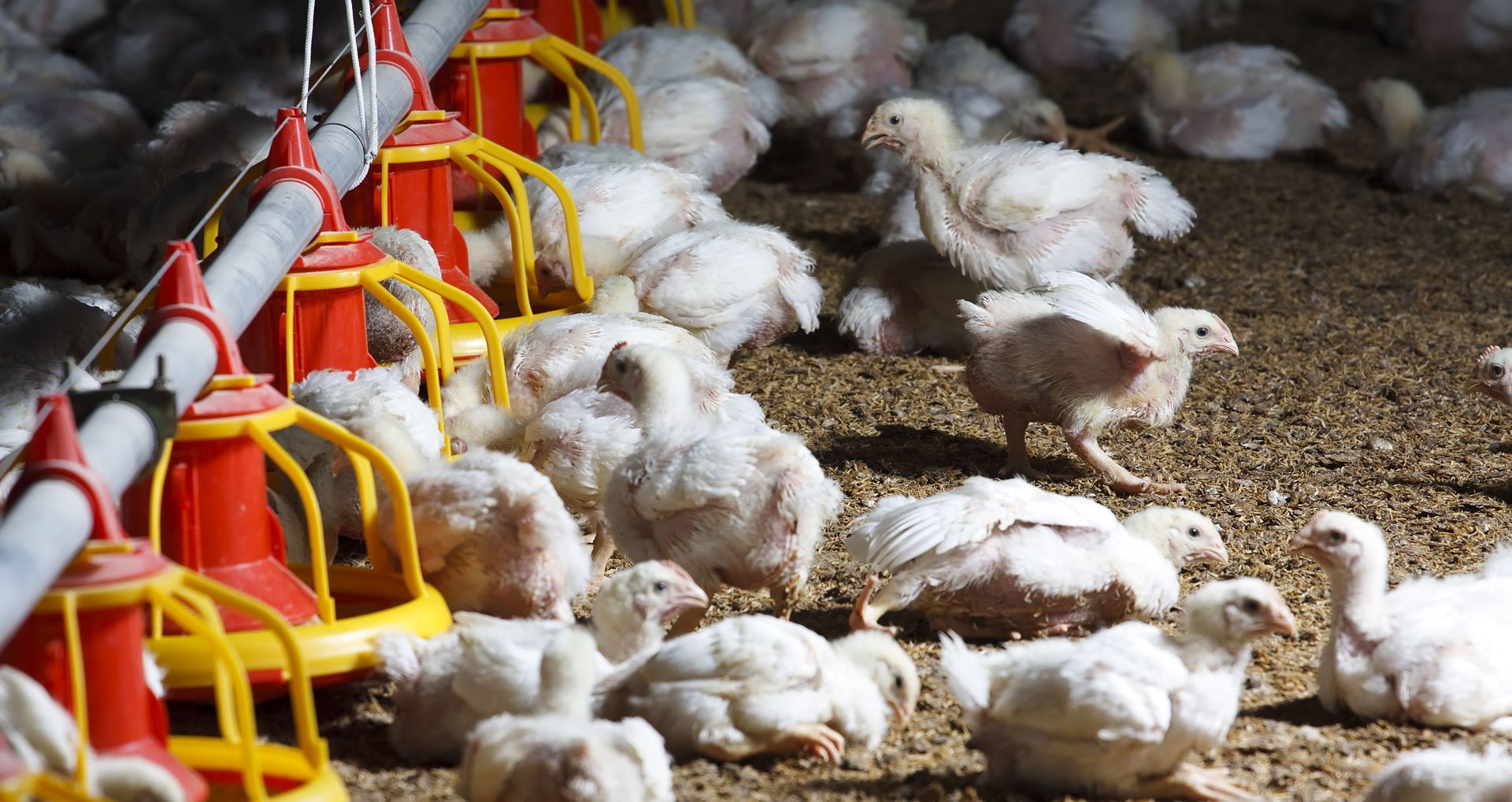
Perhaps the most critical current threat to public health caused by modern industrial animal agriculture practices is the demise of antibiotic efficacy. Antibiotics, or antimicrobials, have played a crucial role in protecting public health by curing a wide range of bacteria-caused diseases and saving millions of human lives. Overuse of antibiotics, however, has led to the evolution of antibiotic-resistant bacteria that have rendered these powerful and life-saving drugs ineffective. 44
The largest culprit in terms of the misuse of antibiotics is industrial animal agriculture, which accounts for about 80 percent of antibiotics sold in the US. 45 On CAFOs, antibiotics are used routinely in healthy animals, ostensibly to prevent disease (rather than to treat infection) but with the added side effect of speeding up growth. 46 While the Food and Drug Administration prohibited the use of antibiotics for growth promotion in farm animals in early 2017, this rule is practically unenforceable given current antibiotic use practices on CAFOs.
In addition, there is little regulation of work conditions or worker exposure in CAFOs. The conditions in these high-density animal houses provide many opportunities for worker infection. Increased bacterial and viral pathogen exposure as well as infections among farmers, their families and farmworkers at industrial poultry and swine operations (as compared to the rest of the population) have all been reported. 47 Workers at these facilities can also carry antibiotic-resistant bacteria off of the farm and into nearby communities. All of these paths of transmission are of concern, considering the high prevalence of antibiotic resistant bacteria on these farms.
Given the potentially catastrophic human and economic costs of a “post-antibiotic” world, it is imperative that governments and industry take swift action to curtail overuse of these critical drugs. Read more about antibiotics.
Food Safety
Foodborne illness is a widely underreported public health problem that can start at many links along the food supply chain. Contamination can occur at the farm, during processing and distribution, as well as at the food service level or with a home chef. As our food system becomes more and more industrialized, the danger of widespread contamination becomes more and more likely. For example, if a large-scale industrial crop field were sprayed with contaminated water or animal waste, produce picked at harvest could infect a large number of consumers who purchase the product further down the supply chain. 48 For animal products, like ground beef, as well as produce, foods from one location may end up in supermarkets or restaurants all over the country, making it difficult to trace the origin of an outbreak and even harder to contain.
Food Safety and Animal Agriculture
Slaughter and processing facilities are particularly prone to bacterial spread. If improperly handled, fecal matter can spread to tables or tools or to the meat itself. Production speeds in processing plants can make it difficult for workers to take the necessary care to prevent contamination. Along with production line speeds, the centralization of slaughter and processing facilities is a major culprit in contamination outbreaks.
In 2015, the USDA recalled 150 contaminated meat products, covering 21.1 million pounds, including 5.1 million pounds for contamination by Listeria, Salmonella, and various forms of E. coli. 49 Meat and poultry were responsible for 2.1 million illnesses in the US over a ten-year period examined by Centers for Disease Control researchers — in other words, 22 percent of all foodborne illness. 50 In 2014, Wolverine Packing Company recalled approximately 1.8 million pounds of ground beef products after 12 people were infected with outbreak strains of E. coli in four states. 51 That same year, Tyson Foods recalled 33,840 pounds of mechanically separated chicken parts that infected nine people in a correctional facility in Tennessee with Salmonella. 52 Baseline studies by the USDA’s Food Safety and Inspection Service found that 26.3 percent of raw chicken parts in the US tested positive for Salmonella and 21.4 percent for Campylobacter. 53
Some diseases can spread from farm animals to humans, such as swine flu (H1N1), avian flu and mad cow disease. 5455 These diseases can be transmitted through exposure to an infected animal, or in the case of mad cow disease (bovine spongiform encephalopathy, or BSE), by consuming contaminated beef. 56 Animals held in confinement can spread disease rapidly as infected animals are more difficult to identify and isolate, resulting in outbreaks within entire herds. The ability of diseases to spread rapidly among animals in close quarters can also result in public health epidemics. 57 Flu viruses, for example, have an advantage in confined conditions because they have the ability to rapidly mutate and evolve, potentially gaining the ability to infect humans or become more infectious, as is the case with the H1N1 virus. 58
Food and Environmental Justice
At the core of many of the public health issues in the food system is their connection to social and environmental justice and their disproportionate impact on marginalized populations at every level of the supply chain.
Our most vulnerable populations in the US suffer mainly from lack of access to healthy foods and limited spending choices. While it is ideal for consumers to purchase sustainably raised meat and produce, these options are often unaffordable to low-income households, which is why many have turned to cheap, processed foods and suffer diet-related diseases.
CAFOs also disproportionately affect low-income households and especially people of color, as they tend to be located near low-income rural communities. 59 Due to generations of income disparity and racial inequality, such communities find themselves especially the mercy of environmental factors, because they have neither the power nor financial agency to protect themselves from the pollution, nor the financial ability to move from affected areas. Factory farms not only pose a threat to public health: by causing an environmental crisis in low-income rural communities, these companies have created a situation of environmental and social injustice. 6061
Worker Safety
Farm and processing plant workers are exposed to an array of dangerous conditions while working for very low wages. It is estimated that six in 10 farm workers are undocumented immigrants, though this number is likely much higher, as undocumented workers are unlikely to disclose their status if threatened with deportation. 62
Farm Workers
Planting and harvesting crops often involves repetitive motions, the operation of dangerous machinery that can lead to injuries, and long days in the hot sun without access to adequate shade, water or breaks. Health problems are common, such as nausea, dizziness, heat exhaustion, dehydration and heat stroke — which is the leading cause of farm worker death. 63 Workers might fear consequences for speaking out against their employers, especially if they risk deportation because they are undocumented.
Farm workers are also regularly exposed to toxic chemicals, whether from applying pesticides or from handling produce that has been recently sprayed, or, in some instances, from being directly in the path of a pesticide application. There are strict rules related to large-scale chemical application, including that it is not to be done when people are in the vicinity; but fines for violation are low, and so it happens. 64 In addition to these hazards, many female farm workers are subject to sexual harassment and abuse from supervisors or other workers. 65
Meatpacking and Processing Workers
Jobs in meat and poultry processing plants are not only poorly compensated but some of the most dangerous. Meatpacking and processing workers kill, eviscerate and cut up thousands of animals every day in conditions that are humid, slippery, loud and in temperature extremes. Respiratory problems, skin infections and falls are common.
The amount of work is determined by the speed of the processing line; at poultry plants, line speeds have doubled in the last forty years, from 70 birds per minute in 1979 to 140 in 2015. Breaks are discouraged or denied, even for the bathroom. 66 On the fast-moving line, repetitive motions can cause crippling musculoskeletal injuries. Workers also wield sharp knives and work with fast-moving heavy machinery. For more on the dangerous conditions in poultry plants and slaughterhouses, learn about labor and workers in the food system and industrial livestock production.
Toward Healthier Practices
Overall, sustainable farming practices (which also incorporate fair and safe working conditions) do not pose a public health threat as industrial food and farming operations do.
Sustainable crop farming uses principles and techniques that do not rely on monocropping or the use of chemical fertilizers and pesticides. Sustainable animal agriculture, done at a sustainable scale, relies on healthy pasture and lower densities of animals, thereby avoiding the many problems discussed above.
Smaller, localized slaughter and processing facilities, although becoming increasingly rare, reduce the problems created by large scale slaughter and processing facilities, which are designed for maximum speeds that can create food safety issues and harmful conditions for workers.
What You Can Do
- To protect the efficacy of our antibiotic supply, purchase meat only from animals that have not been routinely fed antibiotics. Check out our Food Label Guide to find out which labels ensure your products are antibiotic-free.
- Support organizations that are concerned with working conditions and occupational safety for farm workers, such as Farmworker Justice. You can also buy products that are certified to be better for workers, such as the Food Justice Certified label. See our Food Label Guide for more information.
- Seek out the Organic or Biodynamic label, in order to avoid potential pesticide contamination. Read more about these labels in our Food Label Guide.
- Seek out pastured meat and poultry which studies have found to be less likely to have food safety problems. 67
Hide References
- US Centers for Disease Control and Prevention. “Antimicrobial Resistance: Biggest Threats and Data.” CDC, 2013. Retrieved January 12, 2017, from https://www.cdc.gov/drugresistance/threat-report-2013/
- US Government Accountability Office. “Workplace Safety and Health: Additional Data Needed to Address Continued Hazards in the Meat and Poultry Industry, GAO-16-337.” GAO, April 2016. Retrieved January 17, 2017, from https://www.gao.gov/assets/680/676796.pdf
- May, Sara et al. “Respiratory Health Effects of Large Animal Farming Environments.” Journal of Toxicology and Environmental Health, 15(8): 524-541 (2012). Retrieved May 21, 2018, from https://www.ncbi.nlm.nih.gov/pmc/articles/PMC4001716/
- Mills, PK et al. “Cancer in migrant and seasonal hired farm workers.” Journal of Agromedicine, 14(2): 158-191 (2009). Retrieved May 21, 2018, from https://www.ncbi.nlm.nih.gov/pubmed/19437276
- US Centers for Disease control and Prevention. “National Report on Human Exposure to Environmental Chemicals.” CDC, 2009. Retrieved May 15, 2018, from https://www.cdc.gov/exposurereport/
- Nicolopoulou-Stamati et al. “Chemical Pesticides and Human Health: The Urgent Need for a New Concept in Agriculture.” Front Public Health, (4) 148 (2016). Retrieved April 23, 2019, from https://www.ncbi.nlm.nih.gov/pmc/articles/PMC4947579/
- Thayer, Kristina A. “Role of Environmental Chemicals in Diabetes and Obesity: A National Toxicology Program Workshop Review.” Environmental Health Perspectives, 120(6): 779-789 (2012). Retrieved May 21, 2018, from https://www.ncbi.nlm.nih.gov/pmc/articles/PMC3385443/
- US Centers for Disease control and Prevention. “National Report on Human Exposure to Environmental Chemicals.” CDC, 2009. Retrieved May 15, 2018, from https://www.cdc.gov/exposurereport/
- Magner, Jorgen et al. “Human exposure to pesticides from food: A pilot study.” Swedish Environmental Research Institute, 2015. Retrieved May 18, 2018, from https://www.coop.se/contentassets/dc9bd9f95773402997e4aca0c11b8274/coop-ekoeffekten_rapport_eng.pdf
- National Pesticide Information Center. “Pesticides and Children.” NPIC, May 2, 2018. Retrieved June 20, 2018, from https://npic.orst.edu/health/child.html
- Lu C et al. “Organic diets significantly lower children’s dietary exposure to organophosphorus pesticides.” Environmental Health Perspectives, 114(2) (2006). Retrieved May 15, 2018, from https://www.ncbi.nlm.nih.gov/pubmed/16451864
- Curl, Cynthia et al. “Organophosphorus pesticide exposure of urban and suburban preschool children with organic and conventional diets. Environmental Health Perspectives, 111(3): 377-382 (March 2003). Retrieved May 15, 2018 from https://www.ncbi.nlm.nih.gov/pmc/articles/PMC1241395/
- National Institute of Environmental Health Sciences. “Endocrine Disruptors.” NIH, (n.d.). Retrieved June 21, 2018, from https://www.niehs.nih.gov/health/topics/agents/endocrine/index.cfm
- Hoppin, Jane et al. “Environmental Exposure Assessment of Pesticides in Farmworker Homes.” Environmental Health Perspectives, 114(6): 929-935 (2006). Retrieved May 15, 2018, from https://www.ncbi.nlm.nih.gov/pmc/articles/PMC1480520/
- Sobsey, MD et al. “Pathogens in Animal Wastes and the Impacts of Waste Management Practices on their Survival, Transport and Fate.” Animal Agriculture and the Environment: National Center for Manure and Animal Waste Management White Papers, p 609-666 (n.d.). St Joseph, Michigan
- US Environmental Protection Agency. “Nutrient Pollution: Sources and Solutions.” EPA, March 10, 2017 Retrieved April 23, 2019, from https://www.epa.gov/nutrientpollution/sources-and-solutions
- Walker, Bill et al. “Across U.S., Toxic Blooms Pollute Lakes.” Environmental Working Group, May 15, 2018. Retrieved June 6, 2018, from https://www.ewg.org/toxicalgalblooms/
- Ibid.
- Bever, Fred. “Shellfish Industry, Scientists Wrestle With Potentially Deadly Toxic Algae Bloom.” NPR’s The Salt, January 4, 2018. Retrieved June 23, 2018, from https://www.npr.org/sections/thesalt/2018/01/04/575345282/shellfish-industry-scientists-wrestle-with-potentially-deadly-toxic-algae-bloom
- Halweil, Brian. “Still No Free Lunch: Nutrient levels in U.S. food supply eroded by pursuit of high yields.” The Organic Center, 2007. Retrieved May 21, 2018, from https://www.organic-center.org/reportfiles/YieldsReport.pdf
- Siegal, KR et al. “Association of Higher Consumption of Foods Derived From Subsidized Commodities With Adverse Cardiometabolic Risk Among US Adults.” JAMA Internal Medicine, 2016; 176(8):1124-1132 (August 1, 2016). Retrieved April 23, 2019, from https://www.ncbi.nlm.nih.gov/pubmed/27379488
- Fiolet, Thibault. “Consumption of ultra-processed foods and cancer risk: results from NutriNet-Santé prospective cohort.” BMJ, 360:k322 (2018). Retrieved April 23, 2019, from https://www.bmj.com/content/360/bmj.k322
- Bray, GA et al. “Consumption of high-fructose corn syrup in beverages may play a role in the epidemic of obesity.” The American Journal of Clinical Nutrition, 79(4), 537-543 (April 2004). Retrieved April 23, 2019, from https://www.ncbi.nlm.nih.gov/pubmed/15051594
- Davis, DR. “Changes in USDA Food Composition Data for 43 Garden Crops, 1950 to 1999.” Journal of the American College of Nutrition, 23, 669–682 (2004). Retrieved April 23, 2019, from https://saveoursoils.com/userfiles/downloads/1351255687-Changes%20in%20USDA%20food%20composition%20data%20for%2043%20garden%20crops,%201950-1999.pdf
- Halweil, Brian. “Still No Free Lunch: Nutrient levels in U.S. food supply eroded by pursuit of high yields.” The Organic Center, 2007. Retrieved May 21, 2018, from https://www.organic-center.org/reportfiles/YieldsReport.pdf
- Evich, Helena Bottemiller. “The great nutrient collapse.” Politico, September 13, 2017. Retrieved June 5, 2018, from https://www.politico.com/agenda/story/2017/09/13/food-nutrients-carbon-dioxide-000511
- Halweil, Brian. “Still No Free Lunch: Nutrient levels in U.S. food supply eroded by pursuit of high yields.” The Organic Center, 2007. Retrieved May 21, 2018, from https://www.organic-center.org/reportfiles/YieldsReport.pdf
- Daley, CA et al. “A review of fatty acid profiles and antioxidant content in grass-fed and grain-fed beef.” Nutrition Journal, 9, 1-12 (March 2010). Retrieved April 23, 2019, from https://www.ncbi.nlm.nih.gov/pubmed/20219103
- Benbrook, Charles M. et al. “Enhancing the fatty acid profile of milk through forage-based rations, with nutrition modeling of diet outcomes.” Food Science & Nutrition, February 28, 2018. Retrieved April 23, 2019, from https://onlinelibrary.wiley.com/doi/full/10.1002/fsn3.610
- Karsten, HD et al. “Vitamins A, E and fatty acid composition of the eggs of caged hens and pastured hens.” Renewable Agriculture and Food Systems, 25(1), pp 45-54 (October 8, 2009. Retrieved April 23, 2019, from https://naldc.nal.usda.gov/download/41808/PDF
- Food & Water Watch. “Factory Farm Map: What’s Wrong With Factory Farms?” FWW, (n.d.). Retrieved December 6, 2016, from https://www.factoryfarmmap.org/problems/
- Hribar, Carrie. “Understanding Concentrated Animal Feeding Operations and Their Impact on Communities.” CDC, 2010. Retrieved May 21, 2018, from https://www.cdc.gov/nceh/ehs/docs/understanding_cafos_nalboh.pdf
- Ibid.
- Hagenstein, Perry R. et al. “Air Emissions from Animal Feeding Operations: Current Knowledge, Future Needs.” National Academies Press, 53 (December 12, 2002). Retrieved April 23, 2019, from https://www.4cleanair.org/NASCAFOReport.pdf
- Hribar, Carrie. “Understanding Concentrated Animal Feeding Operations and Their Impact on Communities.” CDC, 2010. Retrieved May 21, 2018, from https://www.cdc.gov/nceh/ehs/docs/understanding_cafos_nalboh.pdf
- Ibid.
- Beeman, Perry. “Your guide to the Water Works lawsuit.” Business Record, April 15, 2015. Retrieved December 7, 2016, from https://www.businessrecord.com/PrintArticle.aspx?aid=68385&uid=718a9d24-4d05-4710-b37d-66850cc411e5
- Eller, Donnelle. “With Water Works’ lawsuit dismissed, water quality is the legislature’s problem.” Des Moines Register, March 17, 2017. Retrieved May 21, 2018, from https://www.desmoinesregister.com/story/money/agriculture/2017/03/17/judge-dismisses-water-works-nitrates-lawsuit/99327928/
- Kirkhorn, Steven, & Schenker, Mark. “Human Health Effects of Agriculture: Physical Diseases and Illnesses.” National Ag Safety Database, 2001. Retrieved April 23, 2019, from https://nasdonline.org/document/1836/d001772/human-health-effects-of-agriculture-physical-diseases-and.html
- Agency for Toxic Substances and Disease Registry. “Medical management guidelines (MMGs) for hydrogen sulfide (H2S).” ATSDR, October 21, 2014. Retrieved April 23, 2019, from https://www.atsdr.cdc.gov/mmg/mmg.asp?id=385&tid=67
- Environmental Protection Agency. “Particulate Matter (PM) Pollution: Health and Environmental Effects of Particulate Matter (PM).” EPA, June 20, 2018. Retrieved April 23, 2019, from https://www.epa.gov/pm-pollution/health-and-environmental-effects-particulate-matter-pm
- US Department of Health and Human Services. “National Institute for Occupational Safety and Health (NIOSH) Recommendations to the U.S. Department of Labor for Changes to Hazardous Orders.” CDC, May 3, 2002. Retrieved April 23, 2019, from https://www.cdc.gov/niosh/docs/nioshrecsdolhaz/pdfs/dol-recomm.pdf
- Hribar, Carrie. “Understanding Concentrated Animal Feeding Operations and Their Impact on Communities.” CDC, 2010. Retrieved May 21, 2018, from https://www.cdc.gov/nceh/ehs/docs/understanding_cafos_nalboh.pdf
- World Health Organization. “Antimicrobial resistance: Key facts.” WHO, February 15, 2018. Retrieved April 23, 2019, from January 13, 2017, from https://www.who.int/mediacentre/factsheets/fs194/en/
- Bowers, Becky. “Rep. Louise Slaughter says 80% of antibiotics are fed to livestock.” Polifact, October 15, 2013. Retrieved January 13, 2017, from https://www.politifact.com/truth-o-meter/statements/2013/oct/15/louise-slaughter/rep-louise-slaughter-says-80-antibiotics-are-fed-l/
- Hribar, Carrie. “Understanding Concentrated Animal Feeding Operations and Their Impact on Communities.” CDC, 2010. Retrieved May 21, 2018, from https://www.cdc.gov/nceh/ehs/docs/understanding_cafos_nalboh.pdf
- Graham, Jay P. et al. “The Animal-Human Interface and Infectious Disease in Industrial Food Animal Production: Rethinking Biosecurity and Biocontainment.” Public Health Report, May-Jun; 123(3): 282–299 (May-June 2008). Retrieved January 13, 2017, from https://www.ncbi.nlm.nih.gov/pmc/articles/PMC2289982/
- US Centers for Disease Control and Prevention. “How Food Gets Contaminated – The Food Production Chain.” CDC, (n.d.) Retrieved June 5, 2018, from https://www.cdc.gov/foodsafety/production-chain.html
- US Department of Agriculture Food Safety and Inspection Service. “Summary of Recall Cases in Calendar Year 2015.” USDA, 2016. Retrieved May 21, 2018, from https://www.fsis.usda.gov/wps/portal/fsis/topics/recalls-and-public-health-alerts/recall-summaries/recall-summaries-2015
- Painter, John A. et al. “Attribution of Foodborne Illnesses, Hospitalizations, and Deaths to Food Commodities by using Outbreak Data, United States, 1998-2008.” US Center for Disease Control and Prevention, March 2013. Retrieved June 7, 2018, from https://wwwnc.cdc.gov/eid/article/19/3/11-1866-t1
- US Centers for Disease Control and Prevention. “Multistate Outbreak of Shiga toxin-producing Escherichia coli 0157:H7 Infections Linked to Ground Beef (Final Update).” CDC, June 20, 2014. Retrieved June 7, 2018, from https://www.cdc.gov/ecoli/2014/O157H7-05-14/index.html
- US Centers for Disease Control and Prevention. “Outbreak of Salmonella Heidelberg Infections Linked to Tyson Brand Mechanically Separated Chicken at a Correctional Facility (Final Update).” CDC, February 24, 2014. Retrieved June 7, 2018, from https://www.cdc.gov/salmonella/heidelberg-01-14/index.html
- US Department of Agriculture Food Safety and Inspection Service Office of Public Health Science Microbiology Division. “The Nationwide Microbiological Baseline Data Collection Program: Raw Chicken Parts Survey.” USDA, January 2012-August 2012. Retrieved January 17, 2017, from https://www.fsis.usda.gov/wps/wcm/connect/a9837fc8-0109-4041-bd0c-729924a79201/Baseline_Data_Raw_Chicken_Parts.pdf?MOD=AJPERES
- US Centers for Disease Control and Prevention. “Influenza (Flu): Key Facts about Human Infections with Variant Viruses.” CDC, (n.d.). Retrieved May 15, 2018, from https://www.cdc.gov/flu/swineflu/keyfacts-variant.htm
- US Centers for Disease Control and Prevention. “Avian Influenza A Virus Infections in Humans.” CDC, 2017. Retrieved May 15, 2018, from https://www.cdc.gov/flu/avianflu/avian-in-humans.htm
- Mayo Clinic. “Creutzfeldt-Jakob disease.” Mayo Clinic, (n.d.). Retrieved May 15, 2018, from https://www.mayoclinic.org/diseases-conditions/creutzfeldt-jakob-disease/symptoms-causes/syc-20371226
- Schmidt, Charles W. “Swine CAFOs & Novel H1N1 Flu: Separating Facts from Fears.” Environmental Health Perspectives, 117 (9); A394-A401 (September 2009). Retrieved May 15, 2018, from https://www.ncbi.nlm.nih.gov/pmc/articles/PMC2737041/
- Tomley, FM. “livestock infectious diseases and zoonoses.” Philosophical Transactions of the Royal Society B: Biological Sciences, 364 (1530), 2637-2642 (September 27, 2009). Retrieved April 23, 2019, from https://www.ncbi.nlm.nih.gov/pmc/articles/PMC2865087/
- Mirabelli, MC et al. “Race, Poverty, and Potential Exposure of Middle-School Students to Air Emissions from Confined Swine Feeding Operations.” Environmental Health Perspectives, 114(4), 591-596 (April 2006). Retrieved April 23, 2019, from https://www.ncbi.nlm.nih.gov/pmc/articles/PMC1440786/
- Food Empowerment Project. “Environmental Racism.” Food Empowerment Project, 2018. Retrieved May 18, 2018 from https://www.foodispower.org/environmental-racism/
- Socially Responsible Agricultural Project. “Factory Farms Destroy Communities.” SRAP, (n.d.) Retrieved May 21, 2018 from https://sraproject.org/factory-farms-destroy-communities/
- Southern Poverty Law Center. “Injustice On Our Plates.” SPLC, November 8, 2010. Retrieved June 5, 2018, from https://www.splcenter.org/20101107/injustice-our-plates
- National Farm Worker Ministry. “Health and Safety.” NFWM, (n.d.) Retrieved April 23, 2019, from https://nfwm.org/education-center/farm-worker-issues/health-safety/
- Philpott, Tom. “Drifting Pesticides Keep Making California Farm Workers Sick.” Mother Jones, December 21, 2017. Retrieved April 23, 2019, from https://www.motherjones.com/food/2017/12/drifting-pesticides-keep-making-california-farm-workers-sick/
- Human Rights Watch. “Cultivating Fear: The Vulnerability of Immigrant Farmworkers in the US to Sexual Violence and Sexual Harassment.” Human Rights Watch, May 15, 2012. Retrieved April 23, 2019, from https://www.hrw.org/sites/default/files/reports/us0512ForUpload_1.pdf
- Oxfam America. “Lives on the Line: The Human Cost of Cheap Chicken.” Oxfam, October 26, 2015. Retrieved June 5, 2018, from from https://www.oxfamamerica.org/explore/research-publications/lives-on-the-line/
- Consumer Reports. “Consumer Reports’ Tests: Conventional Ground Beef Twice As Likely to Contain Superbugs as Sustainable Beef.” CR Media Room, August 24, 2015. Retrieved April 23, 2019, from https://www.consumerreports.org/media-room/press-releases/2015/08/my-entry/